Wednesday, December 28, 2016

Alcohol use


Alcohol use is a common occurance.   Although consuming alcohol in moderation may not generally be an issue, alcohol affects different people in different ways. There are individuals who should not consume alcohol including:
  • individuals under 21 years old
  • women who are pregnant
  • individuals who will be driving
  • individuals taking medications as there are many medications that interact with alcohol
  • individuals who have cetain medical conditions as alchol can aggrevate their condition
  • individuals in recovery of Alcohol Use Disorder (CDC, 2024)

Factors that determine how alcohol will affect someone include:

  • how much someone drinks
  • how often someone drinks
  • age
  • health status
  • family history 
  • sex
  • weight
  • medications
  • eating while consuming alcohol (Stanford, n.d.)(NIH, Overview, n.d.).


Factors may determine the rate in which alcohol is absorbed, however, consuming too much alcohol will indeed have consequences.  As the amount of alcohol increases in someone's blood, their blood alcohol concentration level (BAC), the more impaired someone becomes, the more consequences they experience. 

Consequences of having a high BAC include:

  • reduced inhibitions
  • slurred speech 
  • motor impairments 
  • confusion
  • memory problems
  • concentration problems
  • coma
  • breathing problems 
  • death (NIH, Overview, n.d.).  
Excessive drinking can be broken down into Binge drinking or Heavy drinking.  Binge drinking is defined by the CDC as four or more alcoholic drinks in a single occasion for women and five or more alcoholic drinks in a single occasion for men.  Heavy drinking is defined by the CDC as eight or more alcoholic drinks per week for women and 15 or more alcoholic drinks per week for men (CDC, 2024).

Alcohol related consequences can lead to greater consequences.  Because of these consequences, car accidents, risky or violent behavior, or suicide or homicide are all risks of drinking alcohol (NIH, Overview, n.d.).  When drinking alcohol in excess over a long period of time, other effects can occur such as:

  • alcohol use disorder
  • interference in brain pathways
  • stroke
  • cardiomyopathy
  • hepatitis 
  • cirrhosis
  • pancreatitis 
  • increased risk of certain cancers (Mouth, stomach, esophagus, throat, liver) (NIH, Effects, n.d.). 
Additionally, alcohol use can have effects during pregnancy.  It can increase the risk of miscarrage, stillbirth or caue Fetal Alcohol Syndrome (CDC, 2024) Long term alcohol use can also lead to Wernicke-Korsakoff Syndrome which is a brain disorder caused by Vitamin B1 (Thiamine) deficiency.  Long term alcohol use can lead to Vitamin B1 deficiency (NIH, Effects, n.d.).


References

Centers for Disease Control and Prevention (2024)  Alcohol Use and Your Health.  Centers for Disease Control and Prevention.  Retrieved from https://www.cdc.gov/alcohol/fact-sheets/alcohol-use.htm#:~:text=Long%2DTerm%20Health%20Risks,liver%20disease%2C%20and%20digestive%20problems.&text=Cancer%20of%20the%20breast%2C%20mouth,liver%2C%20colon%2C%20and%20rectum.

National Institutes of Health. (n.d.)  Alcohol Effects on the Body.  National Institute on
Alcohol Abuse and Alcoholism.  Retrieved from https://www.niaaa.nih.gov/alcohol-health/alcohols-effects-body

National Institutes of Health. (n.d.)  Overview of Alcohol Consumption.  National Institute on Alcohol Abuse and Alcoholism.  Retrieved from https://www.niaaa.nih.gov/alcohol-health/overview-alcohol-consumption

Stanford University. (n.d.) Factors That Affect How Alcohol is Absorbed.  Stanford University.  Retrieved from https://alcohol.stanford.edu/alcohol-drug-info/buzz-buzz/factors-affect-how-alcohol-absorbed

UPDATED 4/23/24

Saturday, June 4, 2016

NC HIV Advocacy Day - June 7, 2016

Tuesday, June 7, 2016 is HIV Advocacy Day in North Carolina.  Unknown numbers will convene in Raleigh to advocate for issues surrounding HIV.  This is a day that has been sponsored by NC AIDS Action Network (NCAAN).  This year, an issue they are raising with lawmakers is the ability, really inability,  for those individuals living with HIV and receiving funds from the AIDS Drug Assistance Program (ADAP) to pay for health insurance premiums bought through the Affordable Care Act's Marketplace with funds received from ADAP.

North Carolina is one of the few states that does not allow ADAP funds to be used for premiums.  Funding for ADAP comes from both state and federal funds as well as rebates from the Pharmaceutical Industry.  The program helps individuals with low incomes to purchase HIV medications.  The ultimate goal is not only to treat as many people with HIV as possible, but to keep them treated as continuous treatment contributes to viral suppression.  Viral suppression helps individuals live longer and healthier lives.  It also makes transmission of HIV more difficult.

Allowing premiums to be purchased with ADAP funds would save North Carolina millions of dollars and improve quality of health.  This is because individuals not only need medications, but need access to healthcare as well.  A guidance was proposed by the US Health Resources & Services Administration in September, 2015 that would require states to use ADAP funding to pay for premiums in order to receive rebates from the pharmaceutical industry.  In states that don't allow funding to be used for premiums, such as North Carolina, money received from rebates would be lost.  This would add up to millions of dollars not being available to those people participating in ADAP in North Carolina.  This would negatively impact the health of these individuals and may contribute to transmission rates of HIV as viral loads go up.  If you are interested in this issue or participating on June 7, visit NCAAN's website, www.ncaan.org, or visit http://statevoices.salsalabs.com/o/72/p/salsa/event/common/public/?event_KEY=649  to register.


REFERENCES

Keeton, K;  Storrow, L.  (2016)   Ken Keeton and Lee Storrow: Better access to HIV medications would save lives.  Greensboro News and Record.  Retrieved from http://www.greensboro.com/opinion/columns/ken-keeton-and-lee-storrow-better-access-to-hiv-medications/article_30abe3dc-4ba7-55a9-b491-c214cb5b5955.html

NCAAN.  (2015)  Lack of Premium Assistance in North Carolina threatens ADAP budget. A Sustainable Future For The NC AIDS Drug Assistance Program.  Retrieved from http://www.ncaan.org/uploads/7/5/8/9/7589793/adap_funding_handout.pdf

HIV/AIDS


Human Immunodeficiency Virus (HIV) is the virus that causes Acquired Immune Deficiency Syndrome (AIDS).  HIV attacks an individual's immune system, specifically CD4 cells, a type of White Blood Cell.  There is a process of differentiation and responses that occur with CD4 cells, but what is important to know is that CD4 cells "kick into gear", so to speak, when someone is exposed to an infectious agent, HIV included.  HIV destroys CD4 cells, and therefore, destroys a person's immune system.  There are treatments for HIV, but there is no cure.  Sometimes HIV and AIDS are thought to be synonymous, but there is a difference.  HIV is the virus.  Someone can be said to be HIV+ if they are infected with the virus.  AIDS is the end stage of the HIV Infection.  Not everyone who is HIV+ has AIDS.  The stage at which someone is diagnosed with AIDS is when they are HIV+,  their CD4 count drops below 200, CD4 cells make up less than 14% of a person's white blood cell count and an individual has developed an opportunistic infection which is an infection that takes advantage of a weakened immune system (UCSF, n.d.).

There are over 1.2 million people in the United States living with HIV.  1 in 8 of these individuals are unaware they are HIV+.  Youth between 13 and 24 make up 25% of new HIV infections.  Men who have sex with men (MSM), African Americans and Hispanics are other groups who are at higher risk of being infected.  Across the globe, 36.9 million people are living with HIV/AIDS.  2.6 million of these people are children (AIDS.gov, n.d.).

Historically, there have been misconceptions about how HIV is transmitted.  HIV is found in bodily fluidds such as blood, semen, pre-seminal fluid, rectal fluids, vaginal fluids and breast milk (AIDS.gov, n.d.).  The ways that HIV is transmitted is primarily through unprotected anal, vaginal and oral sex with someone who is HIV+ and sharing needles/syringes with someone who is HIV+.  It is less common, but it is also possible for a mother to pass HIV to a child, either during pregnancy, childbirth or breastfeeding.  There is also the risk of healthcare workers being stuck with a needle contaminated with HIV+ blood.  Again, this is less common, especially if the health care worker is practicing Universal Precautions.  HIV does not live outside the human body and therefore is not spread by air, water, insects, saliva, tears, sweat, hugging or water fountains (AIDS.gov, n.d.)

The only way to know if someone has been infected with HIV is to be tested.  There are symptoms an individual may experience soon after being infected.  It is usually described as flu like symptoms; fever, chills, rash, night sweats, muscle aches, sore throat, fatigue, swollen lymph nodes and mouth ulcers (AIDS.gov, n.d.).  They can last up to several weeks.  As time progresses, an individual may either not have symptoms or only have mild symptoms.  If someone progresses to AIDS, someone may experience rapid weight loss, recurring fever, extreme and unexplained fatigue, diarrhea lasting more than a week, pneumonia, memory loss or depression (AIDS.gov, n.d.). 

There are ways to protect yourself.  Having sex within a committed relationship, using condoms, not using intravenous or other drugs and using barriers during oral sex are all ways to reduce the likelihood of contracting or transmitting HIV.  For individuals who are in a relationship with someone who is HIV+, using condoms and taking Pre Exposure Prophylaxis (PrEP) can reduce the chances of transmission (WebMD, 2016).

Although there is no cure, there are treatments for HIV.  Different drugs affect HIV in different ways.  Non-Nucleoside Reverse Transcriptase Inhibitors (NNRTIs) inhibits HIV's ability to copy itself.  Nucleoside Reverse Transcriptase Inhibitors (NRTIs) alters what HIV uses to copy itself.  Protease Inhibitors (PIs) disable a protein HIV uses to make copies.  Fusion inhibitors block a protien HIV uses to incorporate its genetic material into a CD4 cell (Mayo Clinic, 2015).  It is important that individuals who are HIV+ start treatment.  It is important that once on treatment, the treatment is continued with no breaks.  While on treatment, the amount of HIV in the body can be lowered to the point where it is hard to detect the virus.  Having the HIV in the body at this level lowers the chance of transmission.

It is possible to live a long time with HIV and there are treatments.  If you are HIV+, it is important to be treated.  If you are HIV-, it is important that you stay HIV-.  It is not possible to look at someone and tell that they are HIV+.  It is possible to be around someone who is HIV+ and not know.  Whether you realize that you know someone with HIV or AIDS or not, it is important to remember that even if you are not INFECTED with HIV, you are still AFFECTED by HIV.


REFERENCES

AIDS.gov.  (n.d.)   HIV Basics.  AIDS.gov.  Retrieved from https://www.aids.gov/hiv-aids-basics/index.html

Avert. (2015)  What are HIV and AIDS?  Avert.  Retrieved from http://www.avert.org/about-hiv-aids/what-hiv-aids
Mayo Clinic. (n.d.)  HIV/AIDS Treatments and Drugs.  Mayo Clinic.  Retrieved from http://www.mayoclinic.org/diseases-conditions/hiv-aids/basics/treatment/con-20013732

UCSF Medical Center.  (n.d.)  AIDS Diagnosis.  University of California San Fransisco.  Retrieved from https://www.ucsfhealth.org/conditions/aids/diagnosis.html

WebMD.  (2015)  Understanding AIDS/HIV Prevention.  WebMD.  Retrieved from http://www.webmd.com/hiv-aids/guide/understanding-aids-hiv-prevention

Saturday, April 9, 2016

Asthma


There are more than 25 Million individuals in the United States diagnosed with asthma, 7 Million of which are children.  Asthma is a chronic disease that affects the lungs.  Specifically, it affects the airways, called bronchial tubes, in the lungs.  When triggered, the bronchial airways become inflammed causing them to narrow.  This means that not enough air is allowed into the lungs.  Mucous may also be secreted into the airways which further impairs airflow into the lungs.  These occur due to what is called airway hyper-responsiveness which is basically when the bronchial tubes "overreact" to triggers.  Triggers may be such things as:

  • Allergies
  • Exercise
  • Irritants (chemicals, smoke)
  • Respiratory infections
  • Medications
  • Gastroesophageal Reflux Disease (GERD)
  • Cold air
  • Sulfites and preservatives (Mayo Clinic, n.d.).


Signs and symptoms of asthma include:

  • Shortness of breath
  • Chest tightness
  • Coughing  
  • Wheezing.  
Individuals will have these symptoms in varying degrees.  For some, it may be minor, others serious, and in some cases, it may be fatal.  In 2013, 3,630 people in the United States died due to asthma (Xu, 2016).  This figure was essentially the same in 2015 with 3,615 deaths due to Asthma (AAFA, 2020).  Ways to know your asthma is worsening include signs and symptoms occurring more frequently, breathing becoming more difficult, or relief inhaler needed more often.

There are several risk factors that predispose individuals to asthma. 

  • Having a blood relative with asthma, 
  • being overweight, 
  • smoking, 
  • being around secondhand smoke and 
  • being exposed to pollution or chemicals (Mayo Clinic, n.d.).  
Asthma, Eczema and Allergic Rhinitis make up what is called the Allergic Triad.  Having one of these conditions increases the chances of having the other two.  Chronic inflammation is the basis of all three conditions.

In order to diagnose asthma, other conditions should be ruled out through a physical exam.  Tests should also be done to check lung function.  Spirometry checks for the amount of bronchial tube narrowing by looking at how much air can be exhaled and how fast it can be exhaled after a deep breath.  Peak Flow meters measure how hard someone can exhale.  Other tests include Metacholine challenge, Nitric Oxide test, chest x-ray, allergy testing and sputum eosinophils test (Mayo Clinic, n.d.).

When determining how severe an individuals asthma is, a classification system is used.  Mild Intermittent refers to mild symptoms up to two days per week and up to two nights per month.  Mild Persistent refers to symptoms more than two days per week, but no more than once per day.  Moderate Persistent refers to symptoms once a day and more than one night a week.  Severe Persistent refers to symptoms throughout most of the day and frequently at night (Mayo Clinic, n.d.).

There are medications and treatments available.  When an individual is having acute difficulty breathing, what is referred to as rescue medications are needed.  Long term medications are used to control asthma symptoms. 

 Short acting beta agonists include:

  • bronchodialators:  inhaler that rapidly relieve asthma symptoms.
  • Ipratropium 

Long Term Medications include:

  • Inhaled Corticosteriods, 
  • Leukotriene modifiers, 
  • Long acting Beta Agonists and 
  • Theophylline
  • Oral or IV corticosteroids: can relieve inflammation in cases of severe asthma, but are only used for a short term.  
 Other treatments:

  • Bronchial thermoplasty is a treatment that heats the airways with an electrode.  This treatment is not used often and is usually done with severe asthma that generally has not improved with inhaled corticosteroids and long term medications.  
Asthma action plans are usually written based on what treatments are being used.  These outlines which medications to take, when to take them and when to increase or decrease the amount of medication.  What the individual's triggers are should also be listed and how to avoid them (Mayo Clinic, n.d).

There are lifestyle changes individuals can make to help alleviate asthma symptoms including:

  • Using air conditioners, 
  • Minimizing dust, 
  • Dehumidifiers, 
  • Preventing mold spores, 
  • Decreasing pet dander and 
  • Cleaning regularly can all help keep asthma to a minimum.
Watch Youtube video below. 


UPDATED MAY 18, 2020


AAFA. (2020) Asthma Capitals 2019: Asthma-Related Mortality.  Asthma and Allergy Foundation of America.  Retrieved from https://www.aafa.org/asthma-capitals-asthma-related-mortality/.

Mayo Clinic.  (n.d.) Asthma.  Mayo Clinic.  Retrieved from http://www.mayoclinic.org/diseases-conditions/asthma/basics/definition/con-20026992

Wheeler, S.  (2009)  The Allergic Triad: Asthma, Eczema and Allergic Rhinitis.  The Orchard and Pea Patch Preschool's Blog.  Retrieved from https://theorchardandpeapatchpreschools.wordpress.com/2009/12/15/the-allergic-triad-asthma-eczema-and-allergic-rhinitis/

Xu, J.  (2016)  Deaths:Final Data for 2013.  CDC.  Retrieved from https://www/cdc.gov/nchs/data/nvsr/nvsr64/nvsr64_02.pdf


Tuesday, March 1, 2016

Autism


            Autism is a group of disorders affecting brain development.  Autism in individuals can vary widely and is therefore known as Autism Spectrum Disorders.  Currently 1 in 68 children in the United States are diagnosed with Autism, 1 in 42 boys and 1 in 189 girls.  This amounts to 3 million individuals in the United States with Autism.  The number of Autism diagnoses have increased over the past 40 years due to improved diagnosis and awareness.
            Research has been done that shows that here are gene mutations associated with Autism.  Although some of these may cause Autism by themselves, in most cases there is a combination of both genetic and environmental factors that contribute.  If there is a genetic predisposition for Autism, environmental factors such as advanced age at time of conception (mom or dad), maternal illness during pregnancy, mothers being exposed to high levels of air pollution or pesticides, and certain difficulties during birth, particularly those where the baby’s oxygen is deprived of oxygen for a period of time.  A woman can reduce the risk of Autism by taking prenatal vitamins with folic acid before conception and during pregnancy.
            There are some common signs of Autism.  Not all individuals with Autism have all the signs and not to the same degree.  This accounts for the wide range of presentations of Autism.  Symptoms of Autism may include being focused on certain objects, not making eye contact, need for routine, repetitive behaviors, difficult social interactions, not responding to name, prefer to be alone (does not engage in play), different verbal abilities, may repeat phrases, obsessively interested in a particular topic, outbursts when in overly stimulate environments and a higher risk of epilepsy.
            Autism is usually diagnosed by a Pediatrician, Child Neurologist, or Child Psychology or Psychiatrist.  Development Screenings and Comprehensive Diagnostic Evaluations are typically performed.  Developmental Screenings should be performed for developmental delays at 9, 18, and 24 months.  Additional screenings may be needed if child has a sibling with Autism or behaviors associated with Autism are present.  A Comprehensive Diagnostic Evaluation involves observing child’s behavior and interviewing parents.  May also include hearing and vision screening, genetic testing or Neurologic testing.
            Although there is not a cure for Autism, there are treatments.  Medications may be used to help manage high energy levels, seizures or the inability to focus.  Occupational Therapy, Speech Therapy, Sensory Integration Therapy and Applied Behavior Analysis.  Therapies can work towards encouraging positive behaviors an developing active living and communication skills.
If you or someone you know have recently had a child diagnosed with Autism, consider downloading the following kit provided by Autism Speaks.
Autism Speaks. (n.d.)  What is Autism?  Autism Speaks.  Retrieved from https://www.autismspeaks.org/what-autism.
Centers for Disease Control and Prevention.  (2015).  Autism Spectrum Disorder.  Centers for Disease Control and Prevention.  Retrieved fromhttp://www.cdc.gov/ncbddd/autism/screening.html

National Institutes of Health.  (2016) Autism Spectrum Disorder Fact Sheet.  National Institutes of Health.  Retrieved fromhttp://www.ninds.nih.gov/disorders/autism/detail_autism.htm

Monday, February 8, 2016

Hypertension

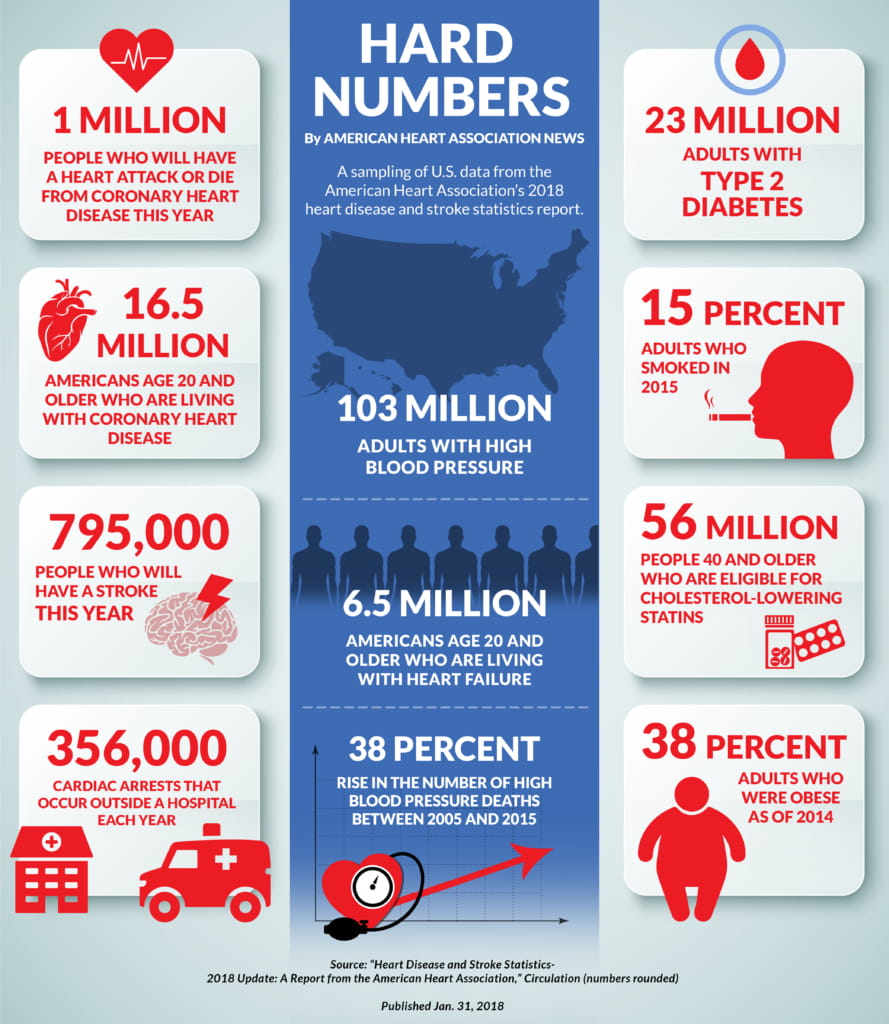
Hypertension, or High Blood Pressure,  is a condition that, unfortunately, is common in this day and age.  Hypertension is the force of the blood onto the blood vessels witin someone's body being too high as the heart pumps (MNT, 2020).  Blood Pressure varies throughout the day, which is normal.  A problem arises when Blood Pressure is high for extended periods of time.  There are about 103 million people in the United States with Hypertension (AHA, 2018).  Many people have no symptoms, but symptoms include:
  • Severe headache
  • Fatigue
  • Confusion
  • Vision problems
  • Chest pain
  • Difficulty breathing
  • Irregular beartbeat
  • Blood in urine
  • Pounding in your chest, neck, or ears (Steinbaum, 2018).
Two types of Hypertension are Primary (essential) Hypertension and Secondary Hypertension.  Whereas there is no identifiable cause with Primary Hypertension, 
Secondary Hypertension occurs due to secondary to such things as:


  • Obstructive Sleep Apnea
  • Cushing's Disease
  • Pregnancy
  • Kidney conditions
  • Adrenal Gland Tumors
  • Thyroid problems
  • Hyperparathyroidism
  • Congenital Blood Vessel Defects
  • Medications (Mayo, 2022)(MNT, 2020).


There are many risk factors for Hypertension, some you can change, some you cannot.  Risk factors you cannot change are:


  • age 
  • race
  • family history (Mayo, 2022).  
Risk factors you can change are:

  • being overweight 
  • being sedentary
  • smoking 
  • excess salt 
  • not enough vitamin D
  • not enough Potassium
  • excess alcohol
  • stress (Mayo, 2022) .  
Having uncontrolled Hypertension leads to:

  • heart attacks
  • heart disease
  • strokes
  • aneurysms
  • heart failure
  • kidney complications
  • vision loss
  • metabolic syndrome
  • memory loss (MNT, 2020).


Blood Pressure is reported by two numbers.  Systolic pressure is the pressure when the heart is pumping blood through blood vessels.  Diastolic pressure is the pressure when the heart is at rest between heartbeats.  

Ranges for Blood Pressure:

  • Normal Blood Pressure is 120/80 and below.  
  • Elevated Blood Pressure ranges from 120-129/80 and below.  
  • Stage 1 Hypertension ranges from 130-139/80-89.  
  • Stage 2 Hypertension occurs at 140 or higher/90 or higher.
  • Hypertensive Crisis occurs at 180 or higher and/or 120 or higher (Harvard Medical School, 2020).


Treatment for Hypertension include:

  •  lifestyle changes
    • using less salt
    • exercise
      • about 30 minutes a day, 5 days per week
    • maintain healthy weight/losing weight. 
    • eating more fruits and vegetables
    • not smoking/smoking cessation
  • Medications
    • Diuretics: typically prescribed first.  
    • If  that alone does not bring a person's Blood Pressure to where it needs to be, another prescription is added like:
      • Beta Blocker
      • ACE Inhibitor
      • Calcium Channel Blocker
      • Angiotension II receptor Blocker
      • Central Agonist
      • Peripheral Adrenergic Inhibitor
      • Vasodilators (MNT, 2020)(Mayo, 2022)(CDC, 2021).

Watch Youtube video below.  Click like, share and subscribe.  Also, in blog, at right of articles, click follow for updates on articles.


UPDATED 2/12/2023


AHA. (2018) More than 100 million Americans have high blood pressure, AHA says.  American Heart Association.  Retrieved from https://www.heart.org/en/news/2018/05/01/more-than-100-million-americans-have-high-blood-pressure-aha-says

CDC.  (2021) High Blood Pressure Symptoms and Causes.  Center for Disease Control and Prevention.  Retrieved from https://www.cdc.gov/bloodpressure/about.htm#:~:text=High%20blood%20pressure%2C%20also%20called,blood%20pressure%20(or%20hypertension).

Harvard Medical School. (2020) Reading the new blood pressure guidelines.  Harvard Health Publishing.  Retrieved from https://www.health.harvard.edu/heart-health/reading-the-new-blood-pressure-guidelines

Mayo Clinic (2022) High Blood Pressure (Hypertension)  Mayo Clinic  Retrieved from . http://www.mayoclinic.org/diseases-conditions/high-blood-pressure/basics/alternative-medicine/con-20019580

MNT. (2020) Everything You Need To Know About Hypertension.  Medical News Today.  Reetrieved from https://www.medicalnewstoday.com/articles/150109

Steinbaum, S. (2018) Symptoms of High Blood Pressure.  WebMD.  Retrieved from https://www.webmd.com/hypertension-high-blood-pressure/guide/hypertension-symptoms-high-blood-pressure

Sunday, January 17, 2016

NEW YEARS RESOLUTIONS: Losing Weight


            At the beginning of every year, many people make New Year’s Resolutions.  There are many different resolutions that are made from financial to career to health resolutions, among others.  Sixty-Eight percent of Americans are currently overweight or obese so losing weight is a resolution that is commonly made.  There are many benefits to losing weight.  Someone does not have to lose the full amount of weight they need to lose before they start benefiting from losing weight.  Losing 5 – 10% can have benefits throughout the body.

            Losing 5-10% of someone’s weight can affect cholesterol.  It can increase HDL, “good”, cholesterol by 5 points.  HDL cholesterol is protective against heart disease and stroke and should be at least 40 mg/dL.    Triglycerides are harmful to blood vessels and should be less than 150 mg/Dl.  High triglyceride levels put people a risk for such thigs as strokes and heart attacks.  Losing 5 – 10% of body weight can decrease triglycerides as much as 40 mg/dL.  LDL “bad” cholesterol is produced by the liver and is a sticky which causes it to attach to the walls of blood vessels.  Losing weight can decrease LDL by 10%.

            Increased weight contributes to increased blood pressure.  The extra weight causes abnormalities that result in the elevated blood pressure.  Decreasing body weight by 5 – 10% can decrease both systolic and diastolic blood pressure by 5 mmHg each.  High blood pressure is a major risk factor for heart disease and stroke so decreasing blood pressure decreases risk for both.  Increased body fat causes chemicals to be released that cause blood pressure to rise and induce the liver to produce LDL.  Reducing weight reduces the amount of chemicals produced.

            For those with Diabetes, Hemoglobin A1C is a test which measures the level of blood sugar levels over the previous 3 months.  A normal Hemoglobin A1C level is 6.5.  Dropping 5 – 10% of body weight can decrease Hemoglobin A1C by 0.5.  Losing 10 pounds can decrease the risk of developing Diabetes by 58%.

            Losing weight can also decrease pressure on joints.  When someone is overweight or obese, each pound equates to 4 pounds of pressure on joints.  Even dropping a little weight can decrease a great deal of pressure off the joints.

            Being overweight or obese increases risk of some cancers such as uterine, cervical, breast, colon, rectum, prostate, among others.  Losing weight decreases the risk for developing these cancers.

            Losing weight should be more than just a new year’s resolution.  It should be a resolution to making your body healthier.  Think about all those that love and depend on you, and decide if losing the extra weight is worth being around longer for those around you.


Pietrzkowsk, N. (n.d.)  Benefits of 5 – 10 Percent Weigh Loss.  Obesity Action Coalition.  Retrieved from http://www.obesityaction.org/educational-resources/resource-articles-2/general-articles/benefits-of-5-10-percent-weight-loss


Gentry, T. (n.d.)  Benefits of Weight Loss.  Learn how you can reduce joint pain and other health risks by losing weight.  Arthritis Foundation.  Retrieved from http://www.arthritis.org/living-with-arthritis/arthritis-diet/losing-weight/weight-joint-pain.php


Healthy Weight for Life.  (n.d.)  Medical Benefits of Losing Weight.  Healthy Weight for Life.  Retrieved from http://www.healthyweightforlife.com.au/medical-benefits.php

Featured Post

Asthma

There are more than 25 Million individuals in the United States diagnosed with asthma, 7 Million of which are children.  Asthma is a chron...